
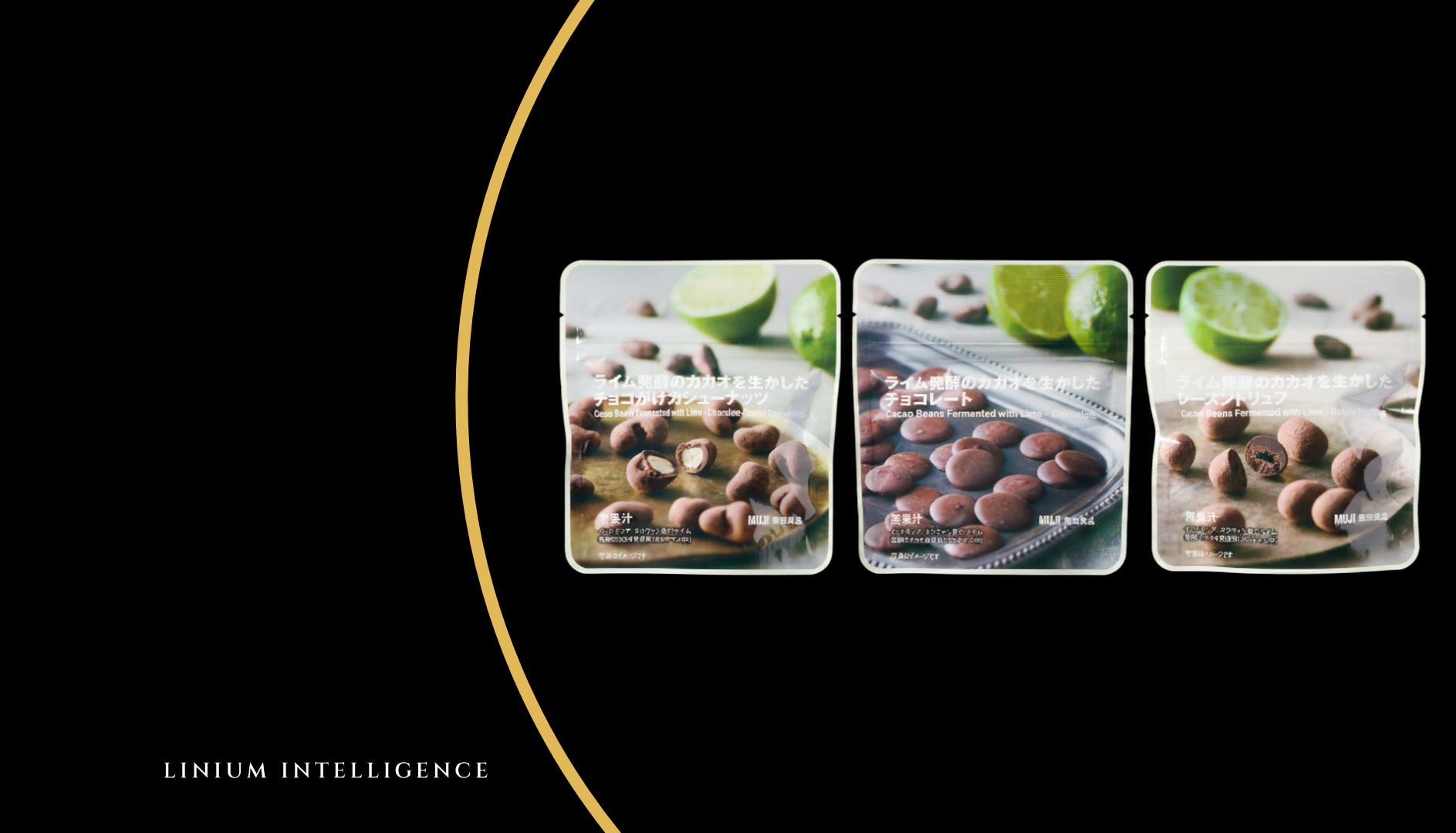
MUJI has introduced a seasonal chocolate collection developed in collaboration with Japanese bean-to-bar producer Dari K, spotlighting cacao fermented with lime—a technique that enhances natural citrus acidity without added flavorings. The lineup includes four items: Chocolate Made with Lime-Fermented Cacao (JPY 490), Raisin Truffles Made with Lime-Fermented Cacao (JPY 550), Chocolate-Coated Cashew Nuts Made with Lime-Fermented Cacao (JPY 550), and Ice Cream Made with Lime-Fermented Cacao Chocolate (JPY 350), with prices current as of December 7, 2025. Select products resumed online sales beginning December 1, and stock visibility is available through MUJI’s online store.
The collaboration draws from Dari K’s sustainable cacao work in Sulawesi, Indonesia, aligning with MUJI’s broader environmental commitments. By adjusting roasting and formulation to emphasize the lime-driven fermentation profile, the release expresses a layered, fruit-forward flavor experience.
The launch arrives amid a global wave of origin-centered and technique-driven chocolate debuts. Across Asia, Europe, North America, and Oceania, brands are foregrounding terroir, fermentation styles, and micro-lot sourcing. From Peruvian, Ugandan, Hawaiian, and Ecuadorian cocoa to regionally specific beans from Thailand, Sumatra, Lore Lindu, and the Davao Region, recent releases across the market underscore a collective shift: consumers increasingly value where cacao comes from and how it is treated.
Whether framed through flavor notes—lychee, osmanthus, citrus, malt—or through collaborations with farmers and local collectives, these launches point to a market increasingly interested in transparency and artisanal craftsmanship. MUJI’s lime-fermented line fits squarely into this movement while bringing an unconventional fermentation technique to the spotlight.
Industry Trends AndThemes
Single-origin as core positioning: Provenance remains central, with launches tied to specific farms, regions, or micro-lots. Example: Jenkins’ Emporium’s Uganda 80% bar; Wellington Chocolate Factory’s Hawai‘i block made with O‘ahu-grown cocoa; Stone Grindz’s Ecuador origins.
Southeast and South Asian cacao on the rise: Producers in Indonesia, Thailand, Malaysia, and India are pushing locally grown cacao into premium categories. Example: Krakakoa’s Lore Lindu 75% bar from West Sulawesi; Kasama Chocolate’s Thai microlot collaboration; Benns Ethicoa’s Malaysian single-origin dark milk range.
Flavor complexity through local ingredients: Chocolatiers are incorporating botanicals, spices, or fruits tied to regional identity. Example: Salt & Sugar Art’s bonbon infused with puxuri, cumaru, and Amazonian spices; Roselen Chocolatier’s blackberry cheesecake bonbon using Tingo Maria cacao.
Sustainability and farmer partnerships as storytelling anchors: Brands foreground ethical sourcing, farmer collaboration, and traceability. Example: Dari K’s work with Sulawesi farmers in the MUJI collaboration; Beyond Good’s Ugandan cocoa; Zotter’s Uganda–Tanzania comparison bar highlighting producer collectives.
Extending single-origin story to other formats: Everyday formats—ice cream, gianduja, coated nuts—are being elevated with specialty cacao. Example: MUJI’s lime-fermented chocolate ice cream; KitKat Malaysia’s dark ice cream made with Bornean cocoa.
Expanding use of non-cane sweeteners: Brands are exploring alternative sweeteners to shift texture and flavor. Example: Beyond Good’s dates-sweetened 100% Ugandan cocoa bar; Manuko’s use of coconut blossom sugar used in their Peruvian-origin hazelnut gianduja pralines.