
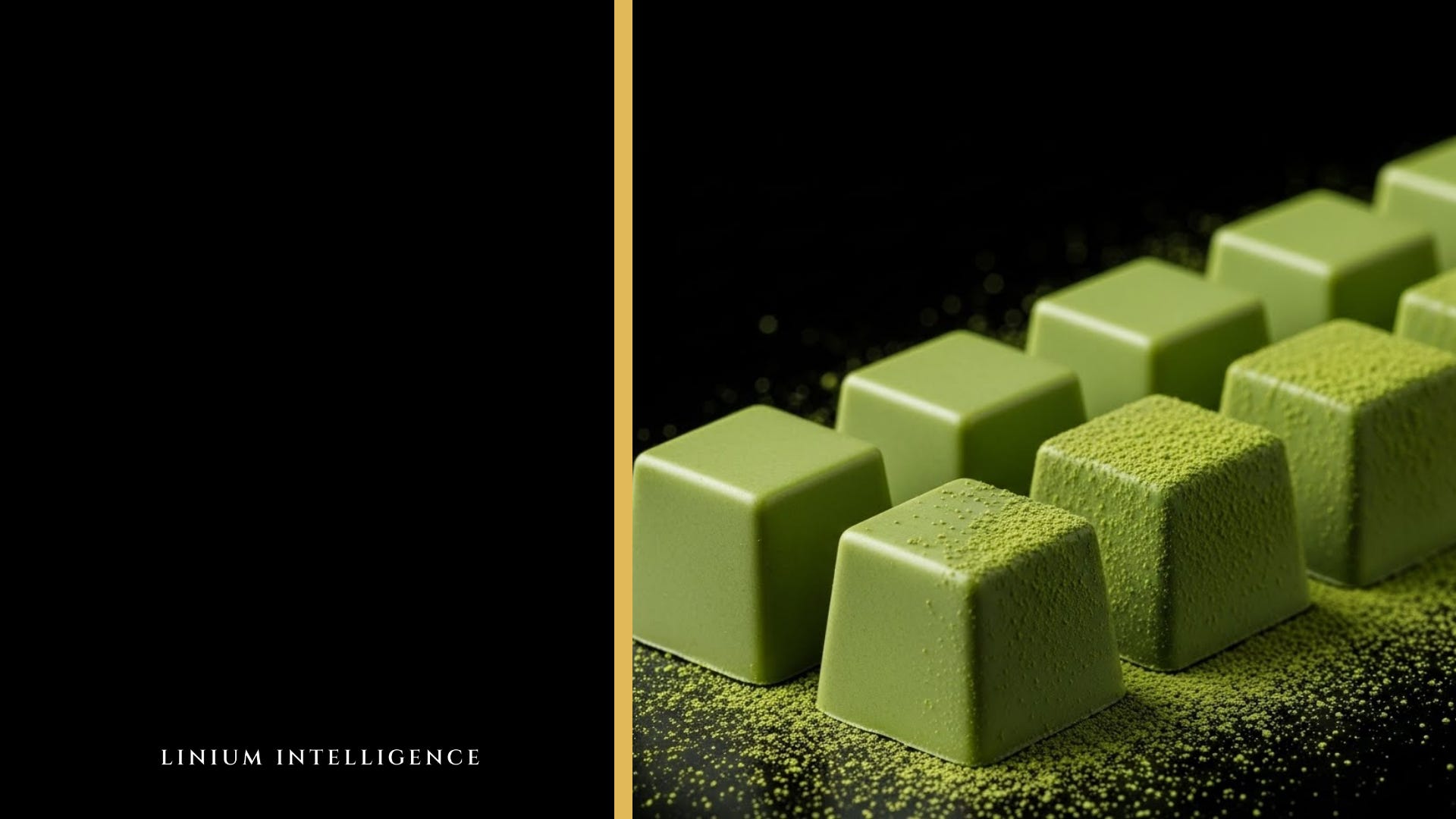
In 2025, matcha chocolate continued to captivate chocolate consumers and emerge as a popular flavor fusion, blending the earthy, umami-rich notes of Japanese green tea with the indulgent creaminess of chocolate. From artisan chocolatiers to global giants, brands worldwide rolled out innovative products, capitalizing on matcha’s health halo and aesthetic appeal.
We’ve identified key standout trends that defined this category. These patterns highlight how matcha is evolving from a niche tea ingredient into a versatile star in confectionery, driven by cultural crossovers, seasonal tie-ins, and consumer demands for premium, experiential treats.
Asian-Inspired Flavor Pairings Dominate
In 2025, matcha chocolate leaned heavily into its Japanese heritage by pairing the vibrant, umami-rich green tea with classic East Asian flavour companions. Standouts included azuki (red bean) in Mr. Bucket Chocolaterie’s Matcha Azuki bon bons, yuzu’s bright citrus lift in Pierre Marcolini’s matcha-yuzu ganache, and Patchi’s Matcha Yuzu, osmanthus and hojicha notes in Conspiracy Chocolate’s Golden Mahjong Tea Collection. Strawberry, while botanically European/Japanese hybrid in modern cultivation, has long been embraced in Japanese confectionery (ichigo daifuku, strawberry KitKat, etc.) and appeared globally as a familiar, crowd-pleasing accent (Stone Grindz, Beyoğlu Çikolata, Lindt Tokyo Style).
Limited-Edition And Seasonal Releases Drive Exclusivity
A surge in time-sensitive drops kept the category buzzing. Brands tied products to holidays like Chinese New Year (Conspiracy Chocolate’s Golden Mahjong Tea Collection) and Mid-Autumn Moon Festival (Läderach’s Matcha Dark mooncakes; Kakawa Chocolates’ Matcha Green Tea & Strawberry Gel mooncakes). Spring-themed collections, such as Stone Grindz’s Spring Tea Party, and autumn exclusives like Lindt’s Tokyo Style Chocolate with matcha, strawberry, and genmai created urgency, encouraging impulse buys and social media hype.
Global Brands Expand Into New Markets
Multinational players like Lindt and KitKat aggressively localized matcha offerings. Lindt launched Matcha LINDOR Truffles in Canada and extended Pick & Mix ranges with Lindor Matcha to Nordic countries (Norway, Finland, Sweden, Denmark), while introducing premium Matcha bars in Switzerland and Germany. KitKat, a matcha staple in Japan, released flavors like Matcha Latte (February) and Matcha Chocolate, supervised by Ito En tea masters. This trend reflects brands adapting to regional preferences, with matcha serving as a bridge to enter or deepen presence in Asia-Pacific and European markets.
Artisan And Premium Chocolatiers Lead Innovation
Small-batch makers emphasized craftsmanship and rare ingredients. Favarger’s Uji matcha range highlighted historical Japanese tea sources, while Norman Love Confections’ Matcha & Ginger Bar with candied ginger, and Fine & Raw’s Pistachio Matcha Bar focused on bold, addictive profiles. Läderach’s marbled FrischSchoggi Matcha Fusion showcased handcrafted marbling techniques. This premium push caters to discerning consumers willing to pay for quality, often positioning matcha as a luxury indulgence.
Nut And Crunch Elements Add Texture
Texture played a starring role, with nuts and crisps enhancing matcha’s smoothness. Pistachio pairings exploded in Patchi’s Matcha Pistachio and Fine & Raw’s globetrotting bar. Meanwhile Patchi’s Matcha Vanille featured crunchy vanilla wafers and Lindt’s Matcha-Strawberry bar feature crispy genmai. These additions provide contrast, making products more engaging and shareable on platforms like Instagram.
Vegan And Health-Conscious Formulations Gain Traction
With rising demand for plant-based options, several launches went dairy-free or vegan. Sue Lewis Chocolatier’s almond white chocolate with matcha and imalivechocolate’s dairy-free matcha granola chocolate emphasized clean ingredients. Fine & Raw’s 70% dark matcha bar appealed to health-focused eaters with its raw, unrefined vibe. This trend aligns with matcha’s antioxidant reputation, attracting wellness-oriented consumers who view it as a “better-for-you” treat.
Collaborations And Crossovers Boost Buzz
Partnerships amplified visibility. KitKat’s tie-ups with Ito En brought tea expertise, while Mr. Bucket Chocolaterie’s collab with Kamakura Singapore fused chocolate and Japanese confectionery. Only Mine Chocolates’ Wonderlands Collection drew global inspirations, including Matcha Rice Cake. These collabs blend expertise, creating hybrid products that feel fresh and culturally resonant.
Middle Eastern And Emerging Market Growth
Matcha chocolate gained traction in the Middle East, with Patchi launching multiple variants in Kuwait, Jordan, and Saudi Arabia. Läderach’s FrischSchoggi in UAE further signaled expansion. Meanwhile local players such as Beyoğlu Çİkolata rolled out their Strawberry-Matcha chocolate bar to new markets
Momentum Could Extend To 2026
As 2025 wraps up, matcha chocolate’s momentum shows no signs of slowing. With its versatility, health appeal, and Instagram-worthy green hue, matcha looks poised to influence broader confectionery trends in 2026.